Deep in a pocket of coastal forest between Watamu and Malindi lie the coral-stone remains of Gede — a Swahili city that, at its height in the 15th and 16th centuries, boasted a Great Mosque, a multi-storey palace, running water via a sophisticated well system, and trade links stretching to China and the Persian Gulf. Then, sometime in the 17th century, its residents left. Almost entirely. And the forest simply grew back over the city, hiding it for nearly three hundred years.
So what happened?
Historians and archaeologists still debate the cause. Leading theories include a catastrophic drought that dried up Gede's wells, a shift in trade routes that starved the city of income, or raids by the Oromo people migrating south along the coast. Unlike more famous abandoned cities, Gede left no written record explaining its own end — part of what makes walking its streets today feel genuinely mysterious rather than curated.
What to look for on your visit
Start at the Great Mosque, one of several mosques on site, then continue to the Palace with its sunken courts and evidence of an early plumbing system rare for its era. The Pillar Tombs — tall coral-stone columns marking important burials — are some of the best-preserved structures of their kind on the Swahili coast. Look up as often as you look at the ruins themselves: troops of colobus and Sykes' monkeys treat the canopy above the mosque as home turf.
Gede is one of the only sites on the coast where you can trace an entire Swahili city's footprint — mosque, palace, marketplace and tombs — in a single walk.
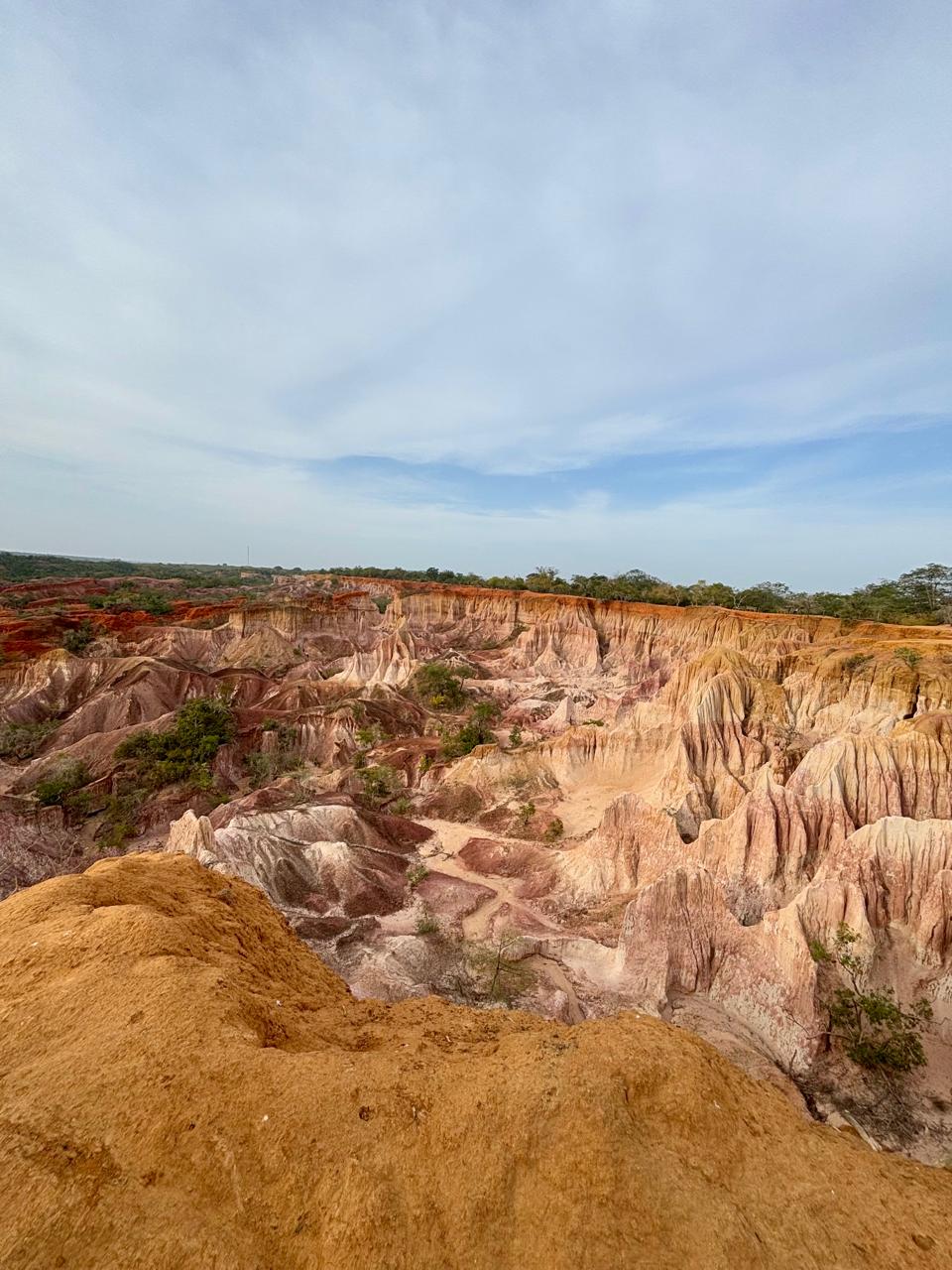
We pair Gede with a drive inland to the equally striking Marafa Hell's Kitchen canyon on our full-day Heritage Tour — history and landscape in a single, unforgettable day.